
General practice is often the first place a complex neurosurgical picture starts to take shape. A patient’s persistent sciatica stops responding to usual care. Another is sent for imaging, which identifies an incidental cerebral aneurysm. Others present with new neurological symptoms or a changed headache pattern that no longer fits their history.
In each of these moments, the GP is making consequential decisions about urgency, investigation, documentation, and where to send the patient next. This resource is designed to support those decisions.
The GP’s role in complex neurosurgical care
Most patients with neurological symptoms will never need surgery. But the diagnosis and treatment pathway for those who do depends on what happens in general practice.
Macquarie Neurosurgery & Spine works with GPs across NSW and ACT as a subspecialised referral partner for cranial, spinal, neurovascular, neuro-oncology, and pain-related conditions.
Key referral considerations for GPs
Consider referral when a patient presents with:
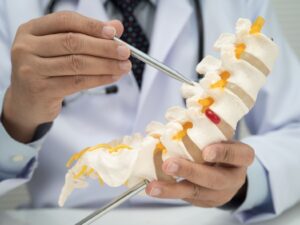
- Persistent sciatica with neurological signs, motor weakness, functional limitation or nerve root compression.
- Back pain red flags, including suspected cauda equina syndrome, tumour, infection, fracture or rapidly progressive neurological change.
- A cerebral aneurysm or arteriovenous malformation (AVM), particularly with acute headache, seizure, focal deficit or relevant imaging findings.
- Brain tumour symptoms such as new seizures, progressive headache, cognitive change, visual disturbance, speech change, balance issues or focal weakness.
- Incidental cranial or spinal imaging findings where urgency or management is unclear.
An academic model built for complexity
Some neurosurgical presentations are relatively straightforward. Others are not.
An unruptured cerebral aneurysm, for example, may require consideration of size, morphology, location, patient age, family history, blood pressure and imaging progression. This same level of nuanced assessment may be relevant for AVMs, brain and spine tumours, Chiari malformation, CSF disorders and complex degenerative spinal disease.
Macquarie Neurosurgery & Spine’s university-integrated model is designed for exactly these cases. Research-informed assessment, multidisciplinary review, and subspecialist input combine to produce a team-based neurosurgical opinion drawing on the latest clinical evidence and clinical practice.
When to refer: neurological presentations in general practice
Sciatica treatment
Most acute low back pain and sciatica can be managed in primary care. Specialist review becomes more relevant when:
- Symptoms persist despite appropriate conservative management
- Imaging correlates with radicular signs
- Neurological symptoms limit work, mobility or daily function.
Degenerative spinal disease
Back pain red flags require urgent escalation. Features suggestive of cauda equina syndrome include:
- New urinary retention or incontinence
- Faecal incontinence
- Saddle sensory change
- Bilateral sciatica
- Progressive leg weakness
- Sexual dysfunction.
Other concerning features include fever, immunosuppression, history of cancer, unexplained weight loss, significant trauma, night pain with systemic symptoms or rapidly worsening neurological deficit.
Cerebral aneurysm and AVM
Urgent assessment is warranted for:
- Sudden severe headache
- Suspected subarachnoid haemorrhage
- Seizure
- Loss of consciousness
- Acute focal deficit.
For incidental findings on imaging, referral enables risk stratification and a surveillance or management plan appropriate to the individual patient.
Brain tumour symptoms
Investigate and refer according to acuity if a patient has:
- New seizures
- Progressive headache
- Vomiting with accompanying neurological signs
- Papilloedema
- Focal neurological deficit
- Speech or visual disturbance
- Gait change
- Cognitive decline.
Early referral may improve the range of options available at the subspecialist level.
Precision technology in practice
Patients referred to Macquarie Neurosurgery & Spine experience a well-resourced surgical environment, which may expand treatment possibilities.
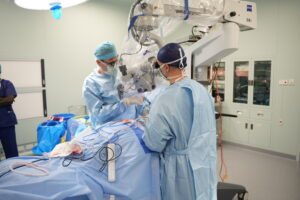
Our subspecialist neurosurgeons use intraoperative imaging, high-resolution microscopes, neuronavigation and multidisciplinary planning to support surgical decision-making and precision.
We may also use Gamma Knife radiosurgery, which delivers highly targeted radiation without a surgical incision. It may be considered for some intracranial lesions, including certain brain tumours and AVMs, depending on diagnosis, lesion size, location, prior treatment and clinical context.
Clinical case insight: neuro-oncology pathway
A GP reviews an older adult with a first seizure, progressive headache and visual disturbance. MRI identifies a small intracranial lesion. A useful referral would include the imaging report, seizure history, neurological examination, medication list and medical background.
At the subspecialist level, the team considers diagnosis, lesion location, surgical accessibility, suitability for biopsy or resection, and whether Gamma Knife radiosurgery has a role.
The GP remains central throughout. Continuity of care sits in primary practice, while subspecialist review informs risk, timing, and treatment planning.
What to include on a neurosurgery referral
A clear referral enables us to triage urgency and prepare for the first consultation.
Where possible, please include:
- The primary clinical question: For example, persistent L5 radiculopathy, incidental cerebral aneurysm, suspected brain tumour, or progressive cervical myelopathy.
- Symptom timeline: onset, progression, severity, and functional impact
- Neurological findings: power, sensation, reflexes, gait, cranial nerve assessment, and sphincter symptoms where relevant
- Imaging reports and access details: MRI, CT, CTA, MRA, angiography, or X-ray
- Prior management: analgesia, physiotherapy, injections, previous surgery, or hospital presentations
- Medical context: anticoagulation, comorbidities, WorkCover or CTP details, barriers to travel
- Urgency indicators: suspected cauda equina syndrome, acute deficit, seizure, suspected haemorrhage, infection, or tumour.
We look forward to supporting your patient and working alongside you to form a strong clinical partnership.
FAQ for general practice
When should persistent sciatica be referred?
When sciatica persists despite conservative management, correlates with imaging findings, limits function or is associated with neurological deficit. Progressive weakness or suspected cauda equina syndrome requires urgent escalation.
When is a cerebral aneurysm referral urgent?
Urgent assessment is required for sudden severe headache, suspected subarachnoid haemorrhage, seizure, loss of consciousness or acute neurological deficit.
Which brain tumour symptoms should prompt referral?
New seizure, progressive headache, vomiting, papilloedema, focal neurological deficit, speech disturbance, visual change, gait disturbance or cognitive change should prompt investigation and referral according to acuity.
Disclaimer
This information is intended for healthcare professionals.