Pain that continues long after an injury has healed (or that arises without any injury at all) is one of medicine’s most challenging problems. By the time you arrive at a neurosurgeon’s office, you’ve probably spent years seeing physiotherapists or pain specialists, trying a series of treatments, but finding that the pain persists.
That experience can be intensely frustrating and discouraging, and highlights the complexity of diagnosing and treating chronic pain. The key question is what’s causing the pain?
Two types of pain, two very different solutions
Nociceptive pain alerts you to a problem and goes away when the problem is solved. You sprain an ankle, nerves fire a warning signal to the brain, forcing you to rest or seek treatment, and the pain gradually fades as the tissue heals. This is a relatively straightforward type of pain, akin to a smoke alarm doing its job; it goes off because the house is on fire, and once the fire is out, the alarm stops.
Neuropathic pain is more complex, arising due to malfunction or damage to the nervous system itself.
Neuropathic pain is akin to a smoke alarm that keeps blaring because the toast is burnt. The threat has gone (or was never really there), but the system has become so sensitised that it can no longer distinguish between a minor irritant and a genuine emergency.
Nerve-related pain may stem from your:
- Central nervous system: your spinal cord and brain
- Peripheral nervous system: the many nerves that spread throughout your body, carrying messages to your organs and limbs.
It can feel like burning, electric-shock sensations or tingling, and can be triggered by something as light as clothing on the skin. It affects an estimated 7–10% of adults and is among the hardest pain conditions to treat.
Once we identify neuropathic pain, we must consider whether its cause is structural or intrinsic in order to identify the most appropriate treatment.
Structural neuropathic pain
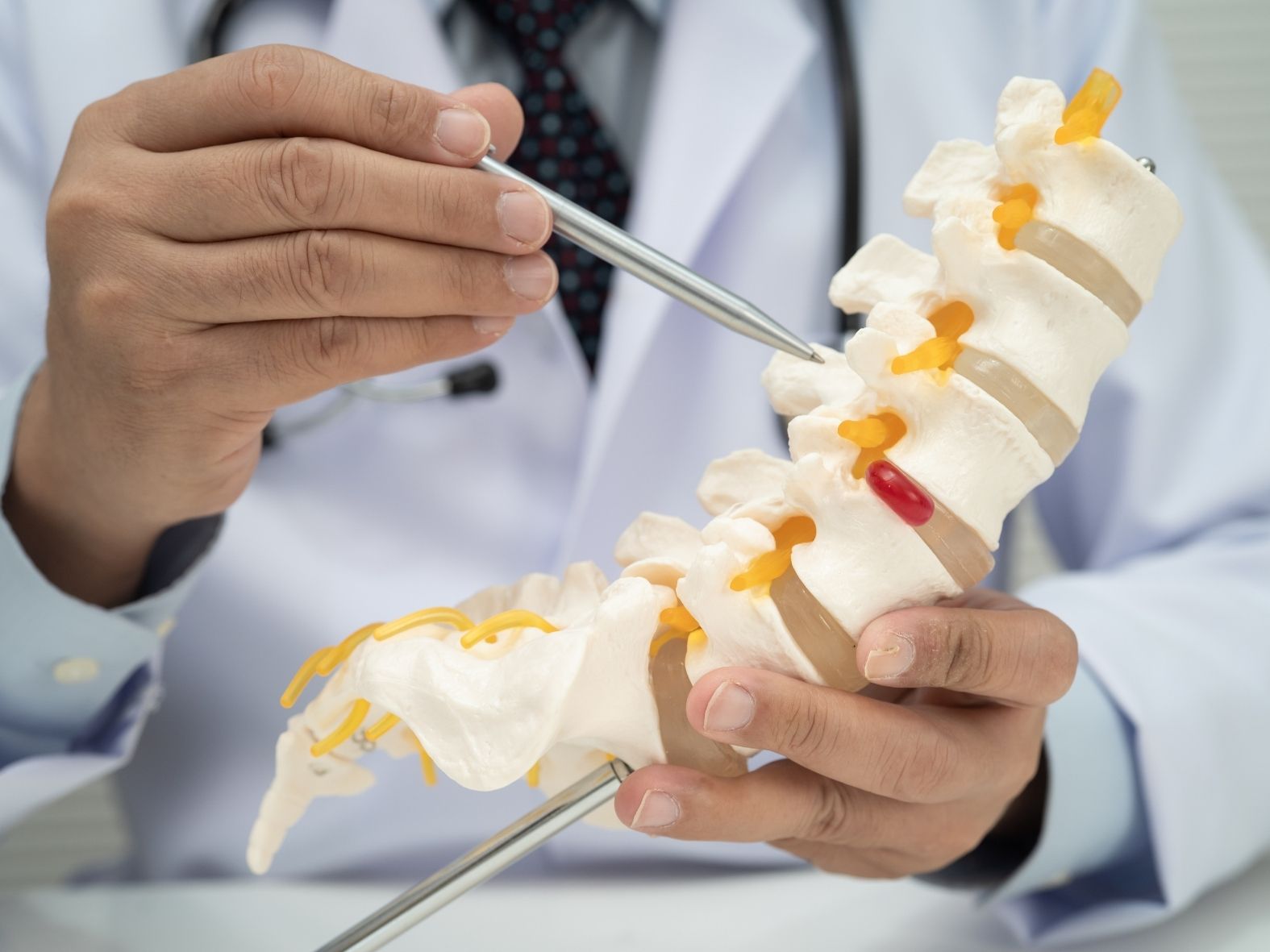
Structural causes involve something physically compressing a particular nerve. The culprit could be a bulging disc, a bone spur, or a thickened ligament pressing on a nerve root or the spinal cord itself. Examples include:
- Radiculopathies (pinched nerves), such as sciatica
- Cervical myelopathy (spinal cord compression in the neck)
- Lumbar spinal stenosis (narrowing of the spinal canal)
- Carpal tunnel syndrome
- A herniated or prolapsed disc (a common cause of back pain).
Structural neuropathic pain is like putting your foot on a garden hose and noticing how the water flow slows or stops. Once you lift your foot, the water can flow freely again. That’s why decompression surgery is often recommended for structural neuropathic pain.
Degenerative cervical myelopathy
Degenerative cervical myelopathy (DCM) is the most common cause of spinal cord dysfunction in adults. Over time, age-related wear in the neck (such as disc degeneration, bone spurs, ligament thickening) can gradually narrow the spinal canal to the point where the spinal cord itself is being squeezed. Unlike a pinched nerve, which tends to cause pain or numbness in one arm, cord compression affects the whole wiring network below that level.
Warning signs include:
- Losing the ability to do fiddly tasks like buttoning a shirt, handwriting, typing
- Walking that feels heavy, unsteady, or wide-based
- Numbness or weakness in both hands or both legs
- An electric shock running down the spine when you tilt your head forward (Lhermitte’s sign)
- New problems with bladder control.
Because these changes happen slowly, they are often put down to ageing or attributed to something else entirely, which delays diagnosis and treatment.
Seek urgent specialist review if you notice progressive hand weakness, gait changes, symptoms in both arms or both legs, or new bladder problems.
Clinical practice guidelines recommend decompression surgery for patients with moderate to severe degenerative cervical myelopathy (DCM). Surgery is primarily intended to stop neurological deterioration, and many patients also experience improvements in function and quality of life after treatment.
Intrinsic neuropathic disorders
Intrinsic neuropathic disorders are different. Here, the nervous system has been altered by disease so that it generates pain even without any ongoing compression or structural problem. Examples include:
- Diabetic peripheral neuropathy
- Postherpetic neuralgia (nerve pain following shingles)
- Complex regional pain syndrome (CRPS)
- Central sensitisation / failed back surgery syndrome
- Trigeminal neuralgia
- Multiple sclerosis-related neuropathic pain
- Post-stroke central pain
- Chemotherapy-induced peripheral neuropathy.
Treating intrinsic neuropathic disorders
Where no correctable structural cause is found, or where pain persists even after successful surgery, your specialist will typically recommend a staged, team-based approach. International guidelines support a combination of medication and non-medication strategies, and the right mix depends on your specific situation.
Medication and procedures
Medications used for neuropathic pain include certain anticonvulsants and antidepressants. This is not because you’re depressed (although estimates suggest 60% of people with neuropathic pain do develop depression). It’s because these drugs act on the nervous system’s pain pathways in ways that standard painkillers do not. Even so, a 2025 systematic review and meta-analysis found that many patients don’t get enough relief from medication alone.
Physiotherapy for neuropathic pain
A physiotherapist experienced in chronic pain may use graded motor imagery, gentle desensitisation, and carefully progressed movement to help calm an overactive pain response.
Psychological support
Cognitive-behavioural therapy for chronic pain addresses the way the brain responds to pain signals and the patterns of avoidance and anxiety that can amplify them.
Neuromodulation
If pain persists despite all attempts at treatment, neuromodulation may be considered. Rather than treating the source of pain directly, it aims to reduce the pain messages travelling to the brain.
Neuromodulation involves implanting a small device that delivers carefully controlled electrical pulses to the nervous system to help reduce pain signals before they reach the brain.
Before any permanent device is implanted, patients usually undergo a temporary trial. This allows you and your surgeon to assess whether the treatment provides worthwhile pain relief and functional improvement before proceeding with long-term implantation.
There are several types of neuromodulation. Depending on the cause and location of your pain, treatment may involve stimulating the brain, spinal cord or the relevant peripheral nerve.
How can we help?
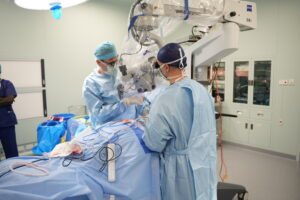
Macquarie Neurosurgery & Spine is one of Australia’s largest academic neurosurgery groups, with subspecialist expertise, multidisciplinary case review and access to advanced hospital technology. We can help you understand your pain and develop an appropriate treatment plan, which may include non-surgical care, neuromodulation or decompression surgery, depending on your needs.
Disclaimer
All information is general and not intended as a substitute for professional advice. Any surgical or invasive procedure carries risks.
References [Accessed 31 May 2026]
- Cleveland Clinic. (2024, July 8). Nociceptive pain. https://my.clevelandclinic.org/health/symptoms/nociceptive-pain
- Cleveland Clinic. (2023, November 13). Neuropathic pain. https://my.clevelandclinic.org/health/diseases/15833-neuropathic-pain
- van Hecke, O., Austin, S. K., Khan, R. A., Smith, B. H., & Torrance, N. (2014). Neuropathic pain in the general population: A systematic review of epidemiological studies. Pain, 155(4), 654–662.
https://doi.org/10.1016/j.pain.2013.11.013 - Cleveland Clinic. (2024, June 26). Cervical myelopathy. https://my.clevelandclinic.org/health/diseases/cervical-myelopathy
- Tetreault, L. A., Karadimas, S., Wilson, J. R., Arnold, P. M., Kurpad, S., Dettori, J. R., & Fehlings, M. G. (2017). The natural history of degenerative cervical myelopathy and the rate of hospitalization following spinal cord injury: An updated systematic review. Global Spine Journal, 7(3 Suppl), 28S–34S. https://doi.org/10.1177/2192568217700396
- Fehlings, M. G., Tetreault, L. A., Riew, K. D., et al. (2017). A clinical practice guideline for the management of patients with degenerative cervical myelopathy. Global Spine Journal, 7(3 Suppl), 70S–83S. https://doi.org/10.1177/2192568217701914
- Bernetti, A., Agostini, F., de Sire, A., Mangone, M., Tognolo, L., Di Cesare, A., Ruiu, P., Paolucci, T., Invernizzi, M., & Paoloni, M. (2021). Neuropathic pain and rehabilitation: A systematic review of international guidelines. Diagnostics, 11(1), 74. https://doi.org/10.3390/diagnostics11010074
- Vieira, W. F., Coelho, D. R. A., Litwiler, S. T., McEachern, K. M., Clancy, J. A., et al. (2024). Neuropathic pain, mood, and stress-related disorders: A literature review of comorbidity and co-pathogenesis. Neuroscience & Biobehavioral Reviews. https://doi.org/10.1016/j.neubiorev.2024.105673
- Soliman, N., Moisset, X., Ferraro, M. C., de Andrade, D. C., Baron, R., Belton, J., et al. (2025). Pharmacotherapy and non-invasive neuromodulation for neuropathic pain: A systematic review and meta-analysis. The Lancet Neurology, 24(5), 413–428. https://doi.org/10.1016/S1474-4422(25)00068-7