
Regular check-ups from birth are vital for tracking your child’s growth and development. During these visits, your healthcare team will measure your child’s weight, length, and head circumference to understand what is normal for them.
Sometimes, these routine checks reveal changes that need a closer look. One condition doctors watch for in children and babies is hydrocephalus, which affects how fluid moves in the brain. Knowing the definition of hydrocephalus and how it presents can help you recognise when your child might need further assessment.
What Is Hydrocephalus?
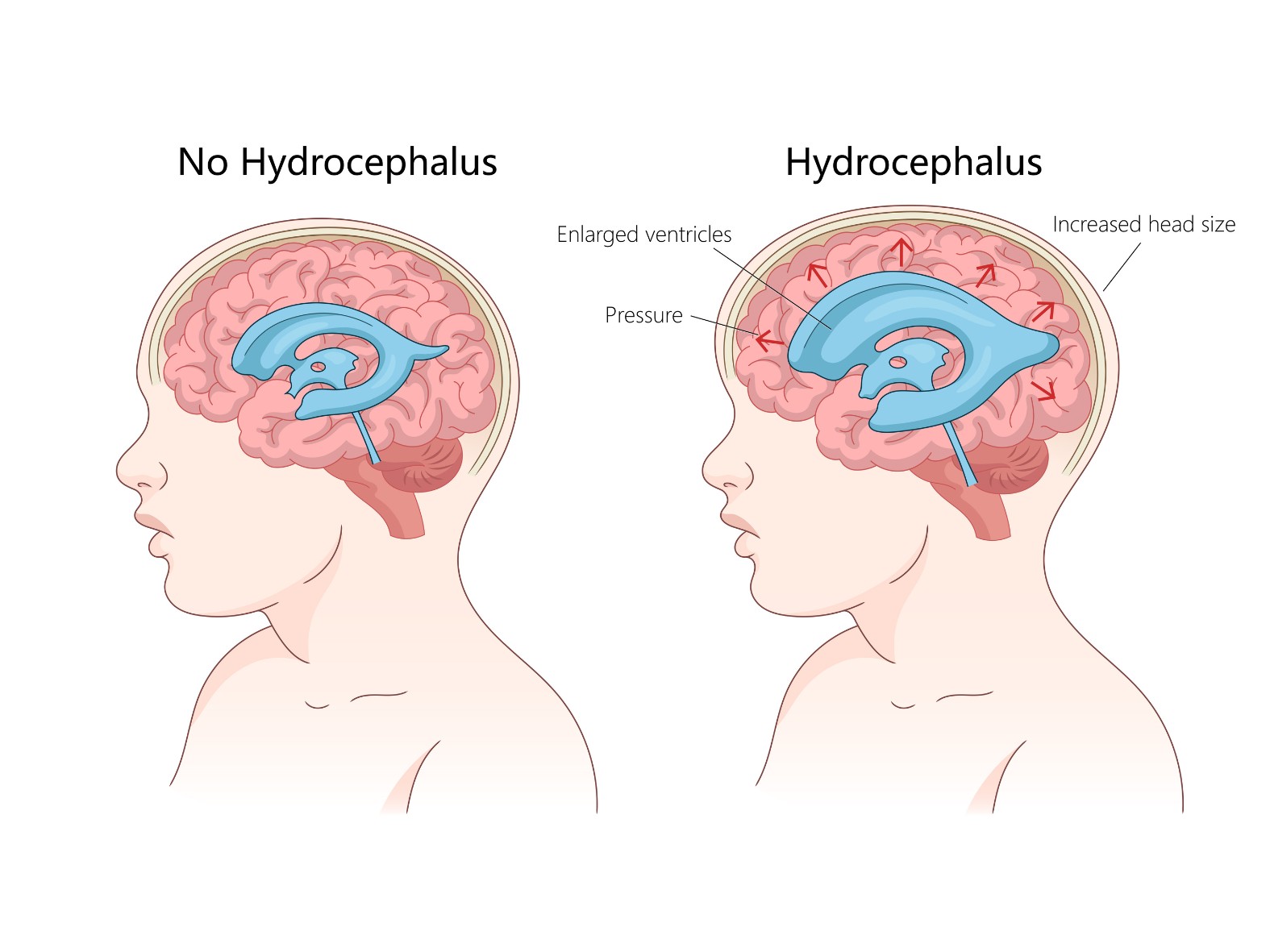
Hydrocephalus is a neurological condition where too much cerebrospinal fluid (CSF) builds up inside the brain. CSF is a clear fluid that usually flows around the brain and spinal cord, helping to cushion and protect the central nervous system.
When the normal flow or absorption of CSF is blocked, the fluid starts to build up in the brain’s ventricles. This causes pressure inside the skull to rise, which can impact brain growth and function, especially in infants and young children. Hydrocephalus can develop for several reasons, including congenital problems like Chiari malformation, infections, or anything else that disrupts the usual movement of CSF.
Why Early Detection Matters
The first seven years of life are especially important for brain development. During this period, the brain builds connections that support learning, movement, behaviour, and communication. Because the brain is still growing, it is more vulnerable to the effects of increased pressure inside the skull.
In hydrocephalus, the extra fluid increases pressure in the brain and can affect your child’s growth, learning, vision, and movement. Spotting the signs early means your child can get the right assessment and treatment sooner, lowering the risk of long-term issues and supporting healthy development.
Signs and Symptoms of Hydrocephalus in Children
Hydrocephalus symptoms can vary with your child’s age. Knowing what to watch for at each stage can help you decide when to seek medical advice.
Signs of Hydrocephalus in Infants and Newborns
In babies and newborns, the bones of the skull are not yet fused, which can make newborn hydrocephalus symptoms easier to detect. Common signs in infants include:
- Rapid increase in head size
- A bulging or tense soft spot (fontanelle)
- Prominent scalp veins
- Vomiting or poor feeding
- Excessive sleepiness or irritability
- Downward-looking eyes (sometimes called “sunsetting eyes”)
Not every infant with hydrocephalus will have all these symptoms at once. This is why it’s so important to keep monitoring your child’s growth and development.
Signs of Hydrocephalus in Older Children
In older children, symptoms may be harder to spot but are still important to recognise. These may include:
- Persistent headaches
- Nausea or vomiting, particularly in the morning
- Vision changes or difficulty focusing
- Balance or coordination problems
- Changes in behaviour, school performance, or personality
The Role of Head Circumference
Measuring head circumference is an important part of monitoring babies and young children. Regular checks help track how your child’s head is growing over time.
A rapid increase in head size can be an early sign of hydrocephalus in babies. While head size alone does not confirm the diagnosis, changes that do not fit the usual growth pattern may mean your child needs further assessment.
Common Myths About Hydrocephalus
There are some common myths about hydrocephalus. One is that it only affects adults, or that it is the same as normal pressure hydrocephalus, which actually happens in older adults and is a different condition.
Another misconception is that hydrocephalus is always obvious at birth. In fact, symptoms can develop slowly over time, so ongoing monitoring is essential.
How Hydrocephalus Is Assessed
To check for hydrocephalus, doctors use a mix of clinical examination, medical history, and imaging tests like ultrasound, MRI, or CT scans. These steps help your medical team see how fluid is moving in your child’s brain and decide if more tests or follow-up are needed.
If you are worried about possible hydrocephalus symptoms in your child, speaking with a medical professional can help you know what steps to take next. For more information about paediatric hydrocephalus and the assessments we offer, visit our dedicated page. If you would like to discuss your child’s situation or get another opinion, you can book an appointment with us at a time that suits you.
Disclaimer
All information is general and is not intended to be a substitute for professional medical advice. Macquarie Neurosurgery and Spine can consult with you regarding your individual health needs.
Any surgical or invasive procedure carries risks. A second opinion may help you decide if a particular treatment is right for you.
References
- Johns Hopkins Medicine. Hydrocephalus in Children. https://www.hopkinsmedicine.org/health/conditions-and-diseases/hydrocephalus/hydrocephalus-in-children, [Accessed 4 February 2026]
- Harvard Centre on the Developing Child. Brain Architecture. https://developingchild.harvard.edu/key-concept/brain-architecture/, [Accessed 4 February 2026]
- Cleveland Clinic. Cerebrospinal Fluid (CSF). https://my.clevelandclinic.org/health/body/csf-cerebrospinal-fluid/, [Accessed 4 February 2026]
- Rogers H, et al. Cerebrospinal fluid shunting procedures in adults and children: outcomes and complications, Journal of Neurosurgery, https://pubmed.ncbi.nlm.nih.gov/18310161/, [Accessed 4 February 2026]
- Klarica M, et al. Pathophysiology of Hydrocephalus, https://pubmed.ncbi.nlm.nih.gov/34065105/, [Accessed 4 February 2026]
- Mayo Clinic. Hydrocephalus — Diagnosis and Treatment, https://www.mayoclinic.org/diseases-conditions/hydrocephalus/diagnosis-treatment/drc-20373609/, [Accessed 4 February 2026]
- Boston Children’s Hospital. Hydrocephalus. https://www.childrenshospital.org/conditions-treatments/hydrocephalus, [Accessed 4 February 2026]